
The Winter Squash Taste-Off
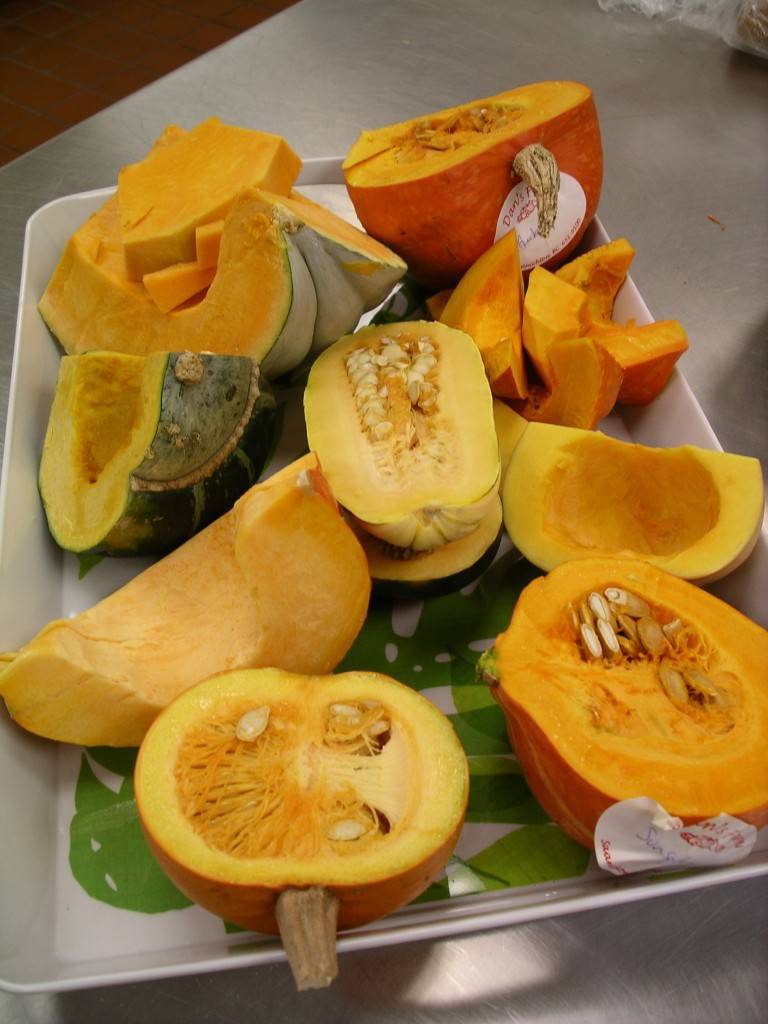
Autumn: the time of year when every cook, I’m sure, has the same burning question: What kind of winter squash is worth the effort of peeling, chopping, and cooking? I mean, there are so many varieties for sale and they are all pretty tough to crack. Which ones taste the best?!
In my Local Harvest cooking class (autumn version only), I aim to answer this very question. I comb farmers’ markets and supermarkets, using up the class food budget to buy every kind of winter squash-like or pumpkinish vegetable I can find. Before class I peel and chop a section out of every squash, toss with a bit of melted butter and salt, and roast on a parchment-lined-and-labeled tray (keeping each variety separate, of course).
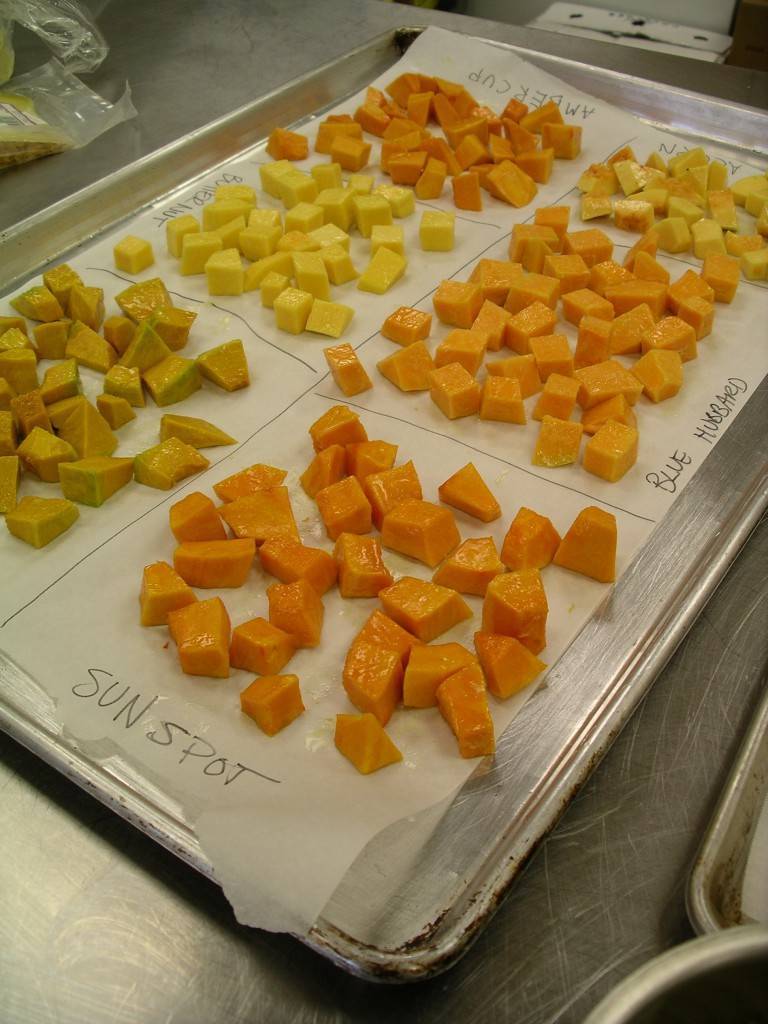
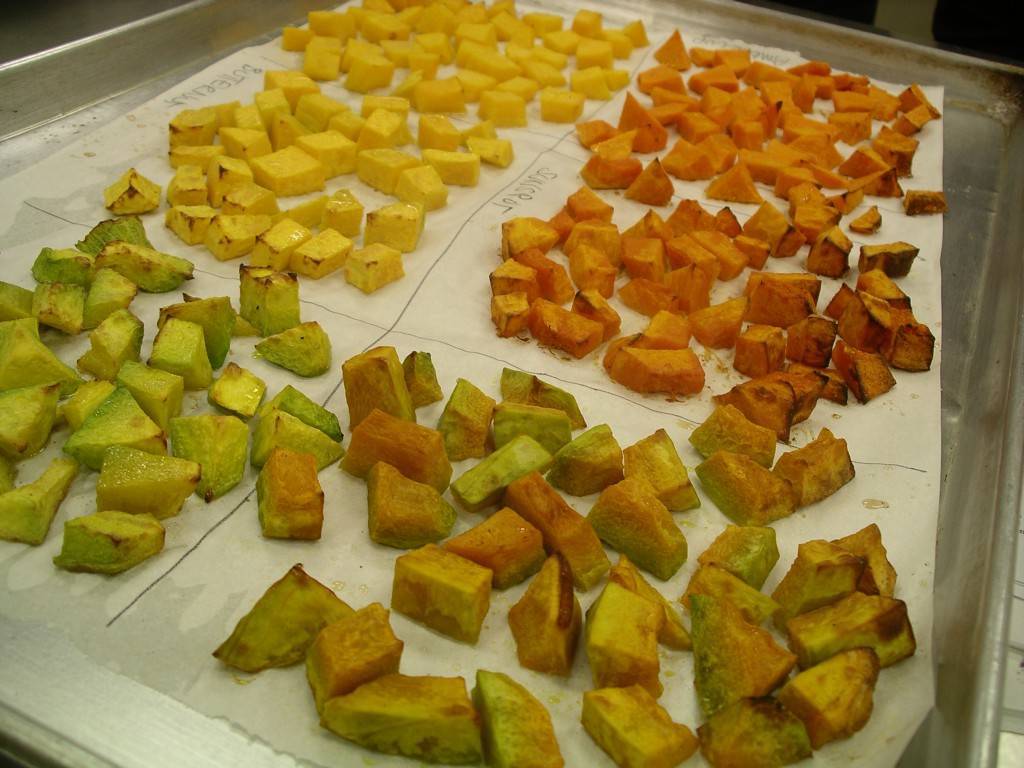
At the beginning of class, we all gather round with our forks in hand and dive in. (I should mention that although only six types of squash are pictured above and below, each Squash Taste-Off has included at least 14 different squash varieties, and are tested by a minimum of 15 people each time.)
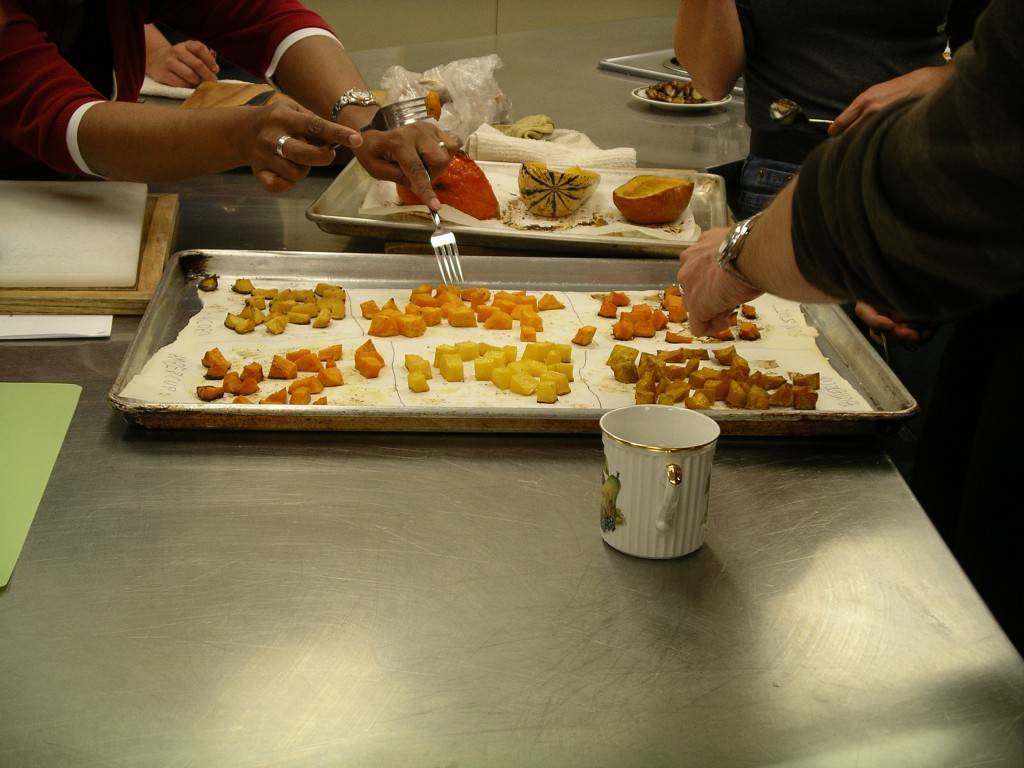
It’s important to taste every single squash. Every person needs to know which one is his or her favourite because winter squash are hard to cut into at best, and, at worst, are severely challenging to any cook with a less-than-perfectly-sharp knife. (All that work had better be worth it!) Despite sharing the blanket name of ‘winter squash’, they all vary in taste, texture, and colour.
Squash can be divided into five loose catergories – these may not be botanically-linked, but this is just how I link them in my mind for culinary purposes. (The results of the various Local Harvest Squash Taste-Offs come after the squash descriptions. Scroll down to see, if you can’t stand the suspense.)
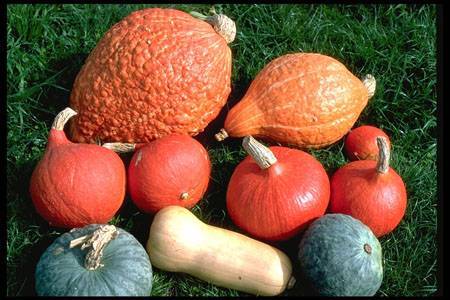 Hubbard Family (except for that lone butternut in there)
Hubbard Family (blue/grey hubbard, green hubbard, orange hubbard, sunspot, red kari) – they all have a torpedo-shape or spinning top shape – slightly pointed on both ends. They are all full-flavoured, sweet, usually moist and ‘buttery’ in texture. Some varieties are a bit drier (e.g. blue/grey hubbard) and some are moister (e.g. green hubbard, and all the orange ones)
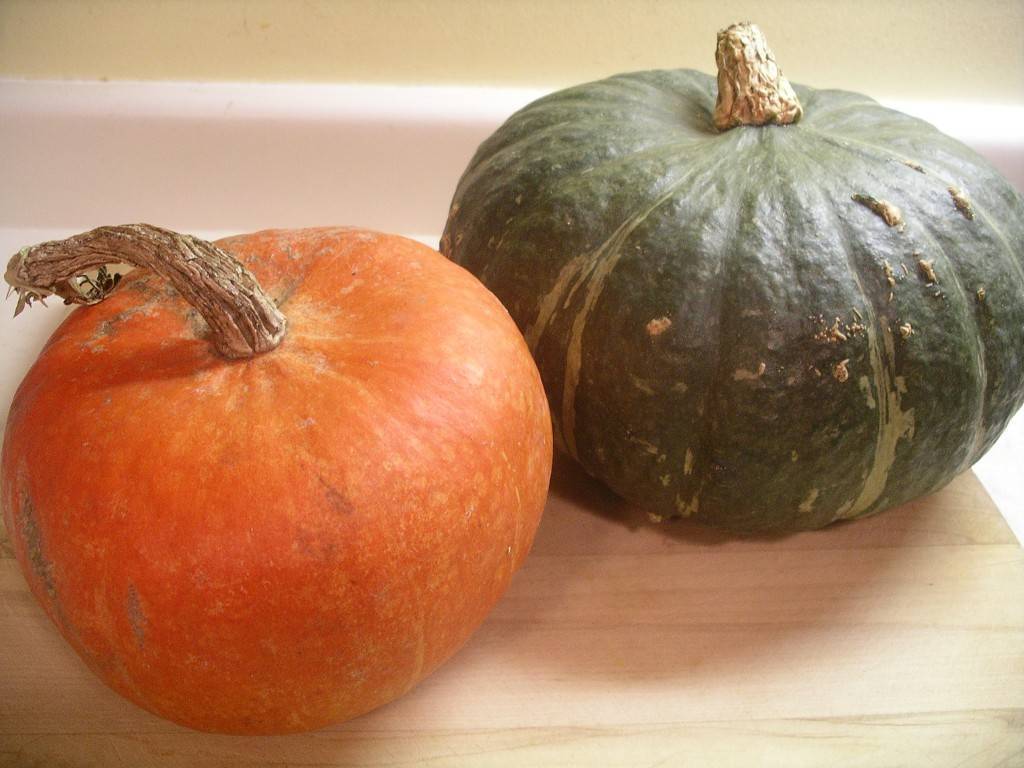 Some members of what I call the Turban Family
Turban Family (turban, buttercup, ambercup, kabocha, sweet mama) – these all have a squat, flattened shape, kind of like a flying saucer, occasionally a bit squared-off, and some have a small or large greyish ‘turban’ visible on the blossom end. They are all very flavourful and often sweet, but most are on the dry, dense side as far as texture is concerned. They make excellent soup, casseroles, and other dishes, but because of their drier texture they sometimes aren’t as good for plain eating. But I say this with reservations, because at least one of the top favourited squashes is in this category.
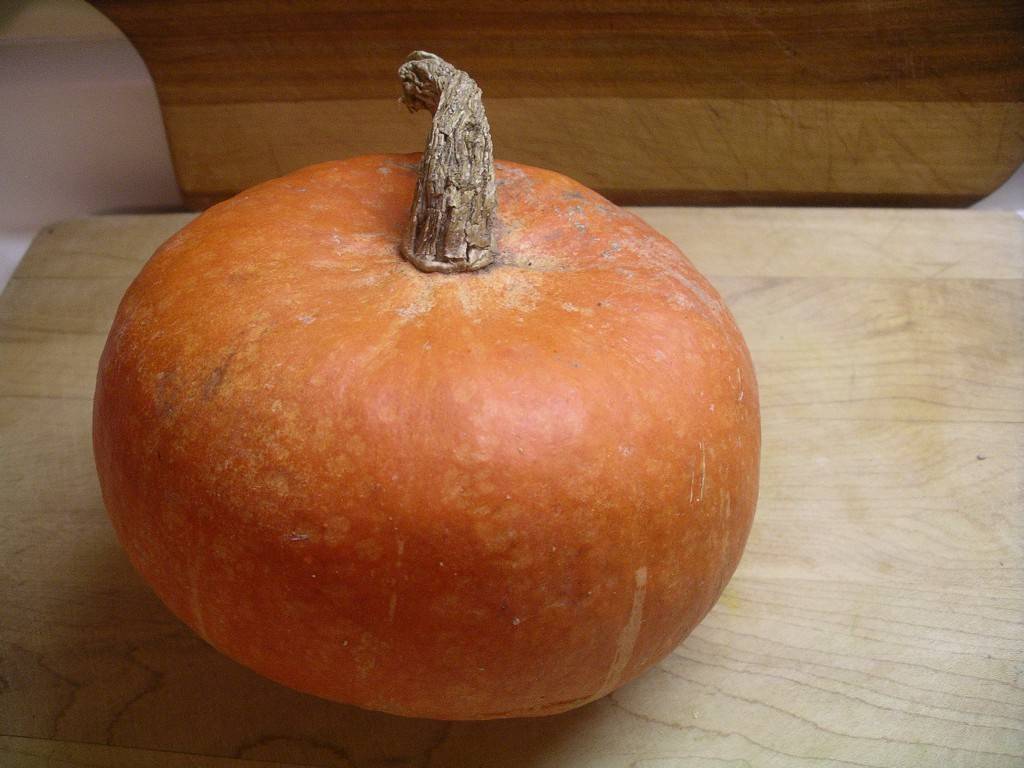
 Sugar Pie Pumpkin. Photo taken with hand so viewers have perspective on size of sugar pumpkins. Not to be confused with Jack-O’Lanterns.
Pumpkins (sugar pie pumpkins, Rouge Vif d’Etampes, aka Cinderella Pumpkins) – mildly sweet and nutty, kind of watery compared to other squash, these are reserved for purees, which you can turn into pumpkin muffins, loaves, pies, chiffon cakes, and soup. Cut in half, scoop out and discard seeds, bake, scoop out flesh and puree. No need to peel and chop.
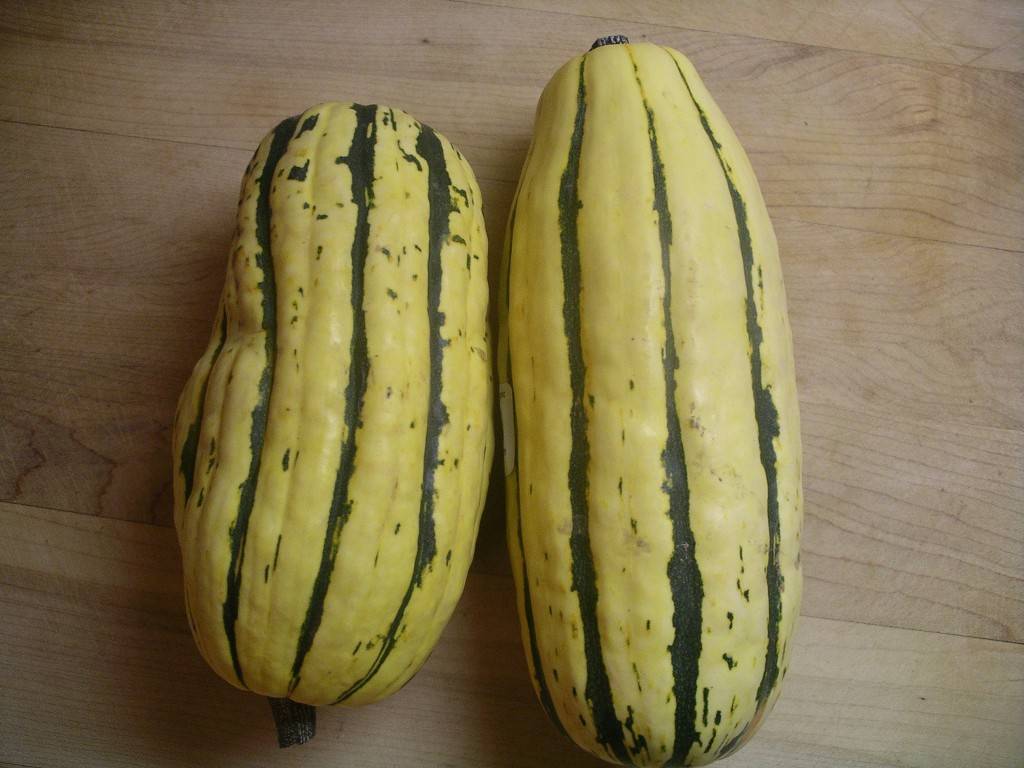 Delicata Squash (also quite little)
Little Ones (delicata, sweet dumpling, sugar loaf, sweet potato) – always sweet, moist and delicious. These are best roasted whole or in halves, unpeeled, possibly stuffed, and scooped out directly from the shell into the mouth. Because of the thinness of the squash walls, if you peel these raw, there will be almost no flesh left.
Others (butternut, acorn, banana, spaghetti) – of these, the only one I really like is banana. I know, a total surprise, but I have done the taste test for a number of years now. Banana squash is generally flavourful, sweet and moist, while the others often leave much to be desired. Acorn has a nice texture and mild flavour, but are hardly worth it for the pain of peeling the ridges. But they can achieve ‘worth-it’ status when baked with the peel on. Butternut used to be great 20 years ago, but has suffered from some kind of watered-down monocrop cultivation or something. I haven’t had a good butternut squash in years. Spaghetti – well, I’ve never liked it, but if you do, by all means, go for it.
So, the results of the taste off!
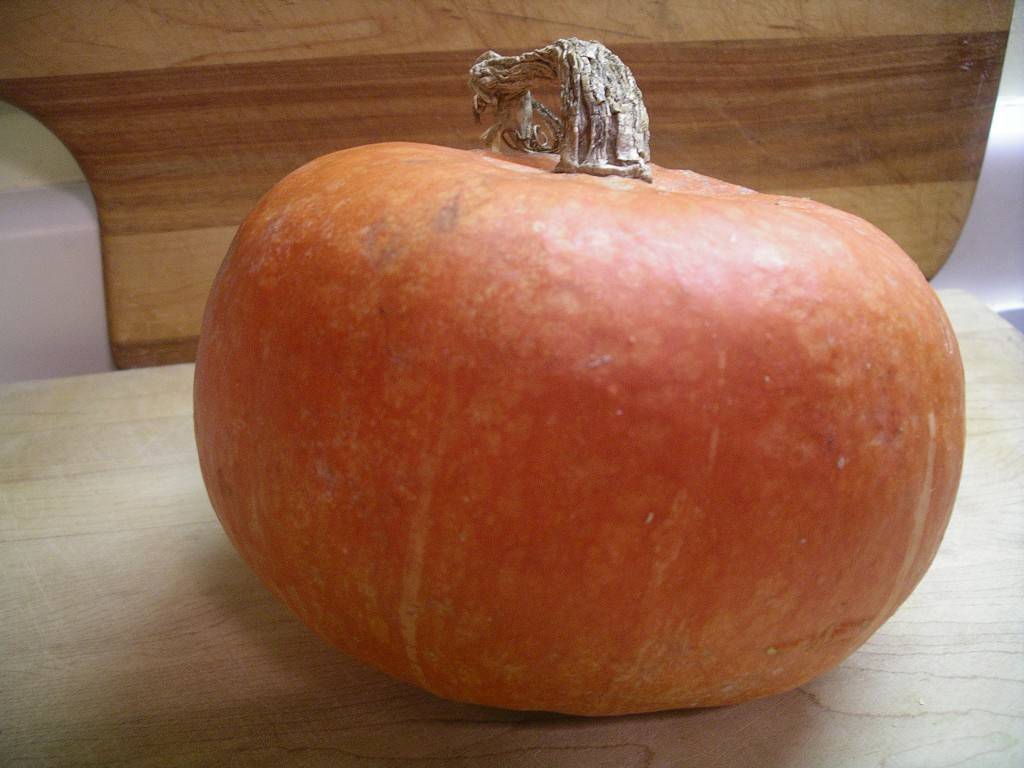 Winner: Ambercup!
Every year, Ambercup (see Turban Family) has won top honours as the favourite squash from the majority (i.e. everyone) of the people at the Local Harvest class. Ambercup is delicious: swee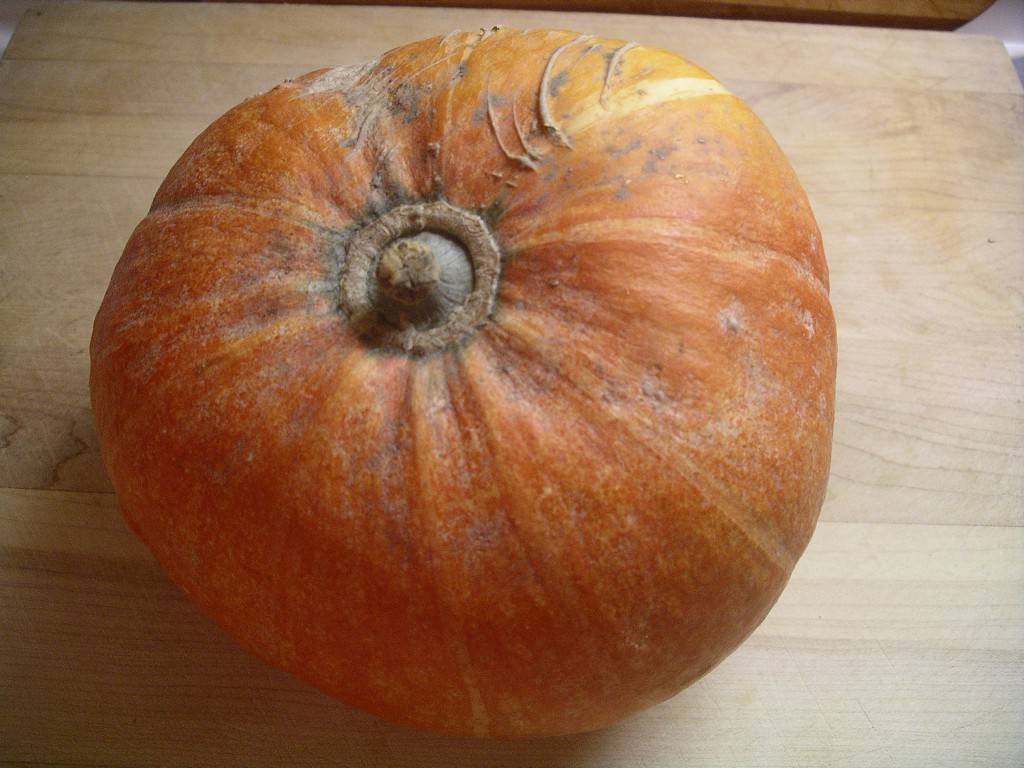 t, deeply flavourful, moist and buttery, wonderful on its own or cooked in things. Go to a farmer’s market or farm stand and buy some today! (Careful: some of the farmers will tell you that Sunspot is the same squash but it definitely is NOT. Sunspot is pretty good, but it has NOTHING on Ambercup. Sunspot is small and torpedo-shaped. Ambercup is a bit bigger and flattened on top and bottom, occasionally with a small grey ‘turban’ on the blossom end – see photo at right.)
Very honourable mentions:
Delicata/Sugar Loaf (see Little Ones) – this is almost always the second-runner up. Bonus – they are the easiest to prepare.
Hubbards of all kinds – they have so much flavour and usually a divine texture (green hubbard was a big surprise this year, with its extra-buttery texture)
Banana – always a big surprise to most people
Very honourable mentions for people who like squash flavour but want it less sweet:
sweet mama – top honours in this category (ironic, really, given its name)
buttercup and kabocha – great great flavour, but a bit on the dry side – these would probably compare more favourably if I had steamed all the squash rather than roasted it – both are favourites of mine for soup and tempura.
Squash that almost nobody liked:
butternut (really!)
acorn (there was a bit of division on this, since many loved the texture. Also these probably taste better when they don’t have to compare themselves to amazing hubbard and ambercup)
sugar pie pumpkins (this last was kind of unfair, because they are a bit watery and stringy compared with other squash in a plain taste-off, but they are truly excellent for baking, as in muffins and pies).
And there you have it. The results of a three-year squash taste-off, for your eating pleasure. Next time: how to peel and chop a winter squash.
UPDATE #1 – I have been asked by a few people where to get Ambercup squash. Answer: you can get it at most of the farm stands throughout Saanich. Both Michell’s Farm on Island View and Dan’s Country Market on Oldfield Rd sell Ambercup.

Thanks, Heidi! I gave up on “just plain eatin'” squash a few years ago because the effort didn’t pay off consistently, and this has caused me to reconsider.
Thank you for taking the time to do this taste-off and publish the results. Very informative, and will inspire me to try some new varieties.
It would be interesting to repeat this test in another month. Some of the big ol good ones need more time in storage to get to their potential.
We love Marina de Chioggia in late winter…and butternut too
a real treat.I think they need time. But it’s good to know when to buy each variety.
I was recently introduced to steamed delicata. No peeling required, just scrub, deseed and slice into half moons and steam. Really good paired with sauteed kale. Don’t know why, just was.
If you had to pick one squash variety, in terms of flavor, which would you choose?
Hi Dwain, I like any squash in the ‘cup’ family: ambercup, buttercup, kabocha.
what is pepper squash, I purchased one today at walmart and they look a lot like acorn squash, what do they taste like?
woohoo for squash! I was happy to find this post via the FBC fb page because I came to love squash rather late in life (and therefore still have a lot to learn) I discovered Kobucha a few years ago and I always steam it, eat it with skin on, and usually make it into Thai-flavoured soup… I’m so happy to read these reviews of other squashes from my area and am now heading out to hunt for some Ambercup. Thanks Heidi!
Will have to try ambercup. I find buttercup a bit dry and dense and thought ambercup would be the same. Two delicious Italian varieties you might like to try are Marina di Chioggia and Violina Rugosa Butternut (yes butternut). Local Motive Grower Co-op was selling them last fall at the Victoria Public Market. Chioggia is almost the texture of sweet potatoes (yams) and even better flavour. It’s supposedly used for gnocchi, but is great for baking and just eating (though quite soft). The outside is very knobbly so not one you can peel before cooking. The butternut is firm and has excellent flavour and the solid neck is as big as the base so there’s a lot of “meat”.
What is the best tasting open-pollinated squash, though. Long ago I read Delicata was on of the best, but I grew it and thought the taste was bland. I prefer a deep orange squash.
Red Kuri and crown prince are our favourites.
Looking high & low for AMBERCUP Squash after reading an article from your area by a Chef and a Squash Bake Off for the Best Quash. Any way you could put me in contact with Mitcheles or Dan’s Country Market?
Thanx for any help you can offer.
Frank
Ambercup won but haven’t found any seed houses that carry them The articla ends up with the below listed Update. UPDATE #1 – I have been asked by a few people where to get Ambercup squash. Answer: you can get it at most of the farm stands throughout Saanich. Both Michell’s Farm on Island View and Dan’s Country Market on Oldfield Rd sell Ambercup.
I like Buttercup and Table Acorn in their prime, which is not too often. The last several years I have become addicted to Delicata. I have given them away to other gardeners and they have commented (and/or started growing) it. Red Kuri and the Chioggia are liked and will test some more, although the Chioggia needs margarine and brown sugar.
Yes, Delicata is amazing!! One of my favourites, as well.
If the sugar pie pumpkin you show in the photo is the one you used in your trials it would indeed be watery and flavourless – it’s not ripe. I grow these every year and they are deep orange when ripe; this soft yellow one is not ready for eating. Acorn squash also suffer from being picked prematurely. They should have a ptach of yellow/orange on one side when fully ripe, and they also improve with storage; will taste better than they do fresh off the field. I’m on the sunny dry prairies in southern Manitoba, so my conditions will be different from yours, but it’s important to compare squash that are at their best maturity to be fair in a taste test.
Good point! That was was not as ripe as it could have been. I find the squash each year taste different depending on growing conditions, ripeness, etc, like you say, and the results of this test vary with that, and with individual preference. But still Ambercup is really good.
I’m looking all over the internet to find Ambercup squash seeds to grow my own. Is there another name these go by? There’s got to be somewhere I can order some.
I’m looking too. Has anyone had any luck finding ambercup seeds?
This must be very regional because we did our own taste off and had very different results. We couldn’t find your winner (Ambercup), but did find several of the “little ones”: Delacata, Sweet Dumpling, Golden Nugget, Carnival, Orange Acorn.
Nobody liked any of these little ones. Everyone’s favorite was Butternut, followed closely by Hubbard. These two were far superior to all of the “little ones.” They had more nutty, mellow flavors and creamier textures. The little ones were far too sweet and had bitter aftertaste.
If we can ever find Ambercup, or a Banana. We’ll have to compare them to our two winners. When I was a kid, I remember seeing Banana squash in the store, but I went to five stores and could find nothing. In fact, most stores only carry three winter squash: Spaghetti, Acorn and Butternut. Occasionally, Butternut is a little bland, but based on my experience, about three-fourths of the time, it’s excellent.
I’m going to update this tasting because it differs from year to year, and I haven’t been able to find Ambercup in a few years!