Jun. 28, 2021
Cooking In Season
Salad Meals to Beat the Heat
In this recipe round up, I have gathered my best and most delicious summer salad meal recipes in one post, for days when it’s too hot to cook!
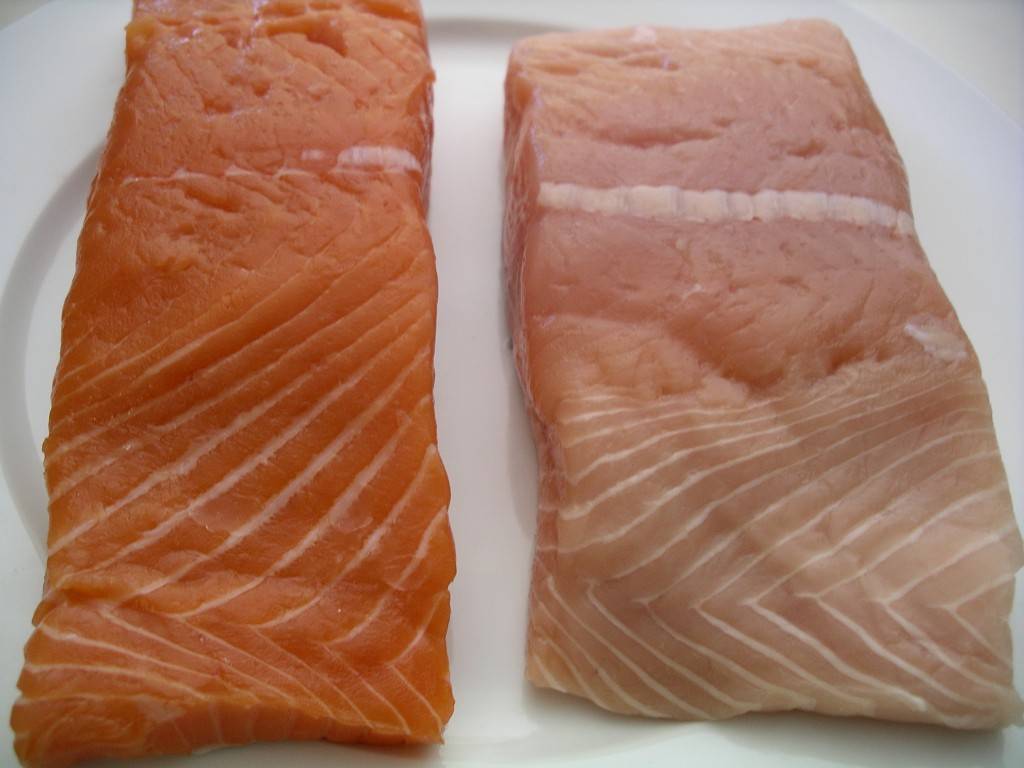
This evening, our family had a taste-test for dinner. And it all started because of the new guy at the fish counter. He insisted that I buy the White Spring Salmon rather than the usual Red, declaring it superior in every way. I had my doubts. I mean, White Spring looks insipid next to the vibrant Red Spring, and my past experiences with pale salmon have been distinctly unpleasant.
However, because of its glowing review from the fishmonger, I was willing to try it. And I decided the very best thing to do would be to buy some salmon in each colour and compare them side by side at dinner. How would I really know if the White Spring was superior without a taste test?
So I did it. I took a large centre-cut fillet of each colour home. I cooked them very simply: pan-seared over medium heat in butter, with the skin side down to start, and only a bit of salt for seasoning. I cooked them until they were not quite done, and let them rest a few minutes before I served them. We all tried the two salmons plain, no sauce, no dressing, no extra salt or pepper.
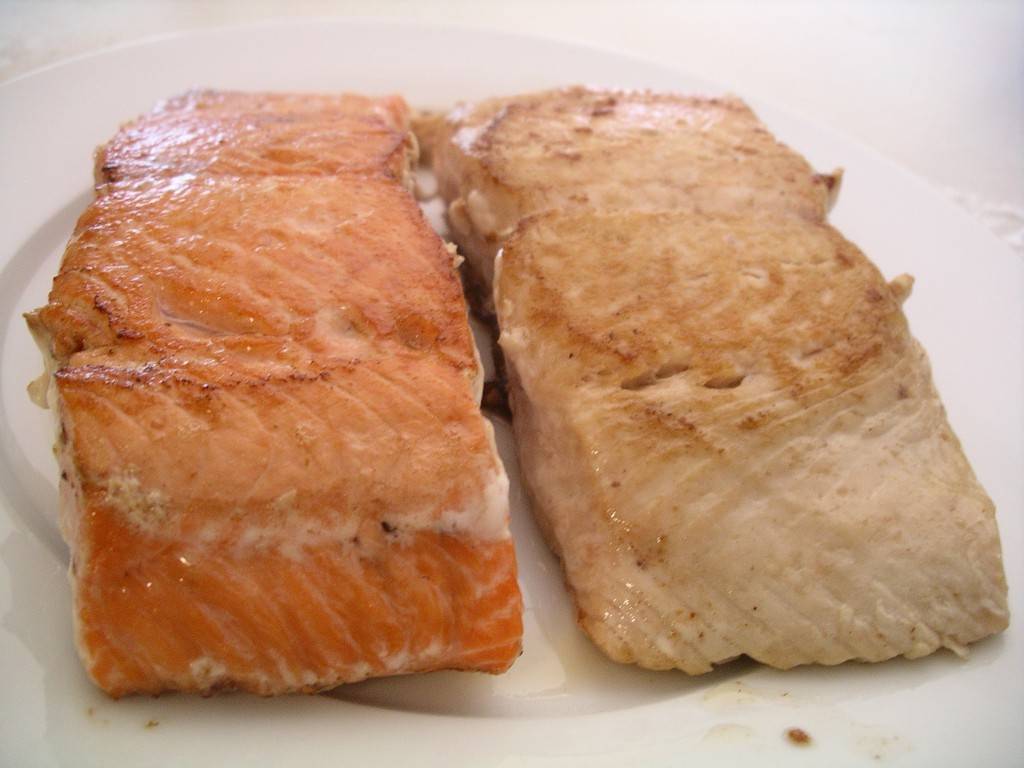
Results – Well, this comment from my husband pretty much sums it up: “When I taste the White one I totally think it’s the best, but then I try the Red and think it’s the best, and then I go back to the White and say ‘oh, yeah, that’s the best’, but then I try the Red and think for sure that’s the best. You know?”
Yes, I do know. Both the Red Spring and the White Spring were deee-licious! Superb, superior, spectacular! Seriously, it was impossible to choose which one was better. They both had the Spring Salmon hallmarks of tender, rich flesh, delicious salmony flavour, and that melt-in-your-mouth texture on the tongue. Fresh spring salmon is one of the best eating fish ever, in my opinion.
But, but, but… there were slight differences. The Red was a little drier, less fatty, and had a slightly stronger salmon flavour. The White was moister and richer, with a very mild, almost nutty flavour – it was less identifiably salmony. But really, I am splitting hairs here. My kids, usually the possessors of picky uber-palates, couldn’t tell the difference, and in fact ran with their plates to the counter to snag more of each colour.
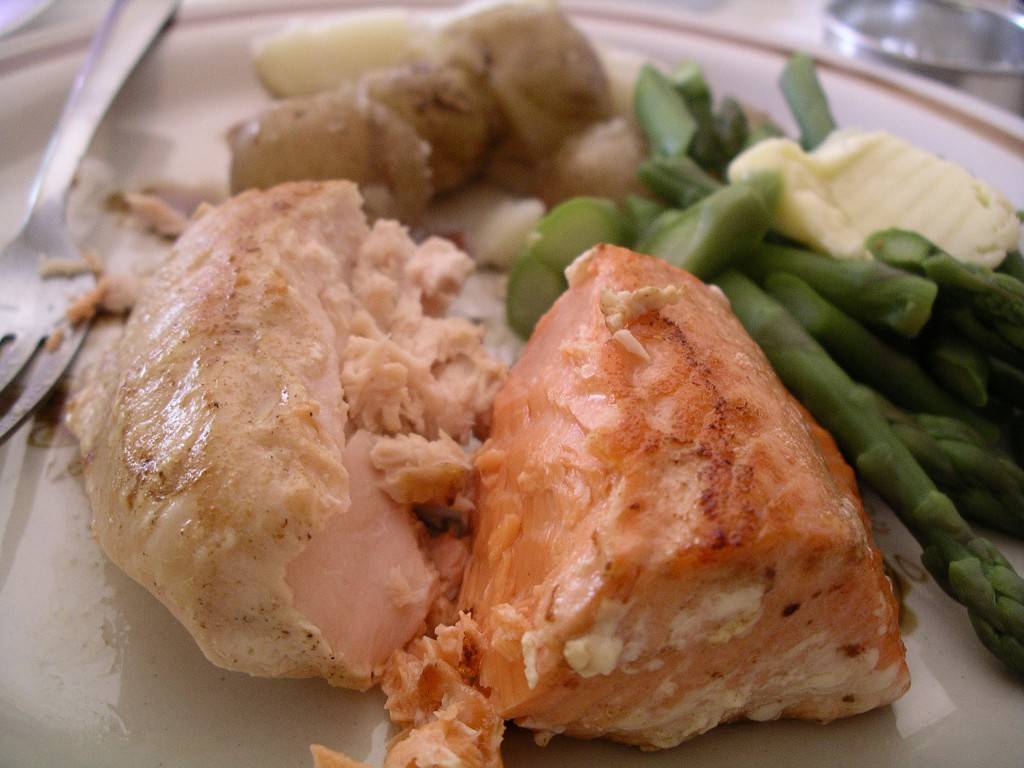
My conclusion after this taste-test is that you can’t go wrong with either kind, but if you tend to over-cook your fish, go for the White, and if you like a more distinct salmon flavour, go for the Red. I will probably choose the Red more often, just because I like the colour, and I avoid over-cooking fish in general. But I am very happy to have been introduced to White Spring Salmon. It is really really good.
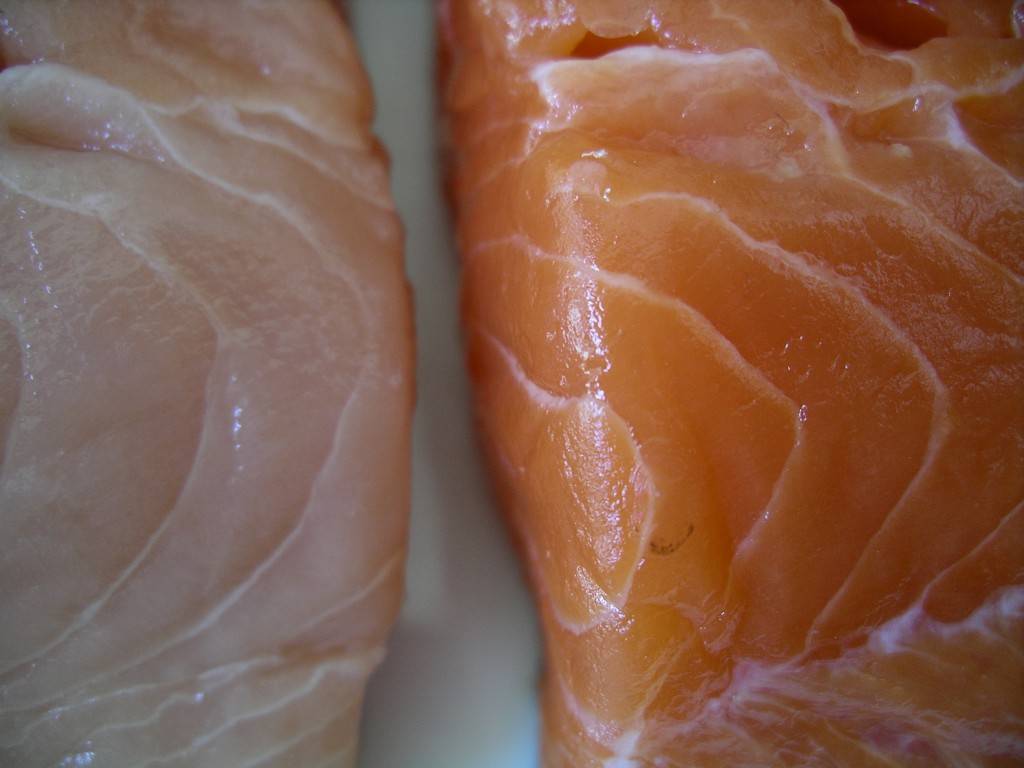
Extra Info: When I asked the fishmonger about where White Spring comes from and why it is white, he said they are indistinguishable from the Red until they are cut open. About 5% of the Spring catch is white-fleshed, and some runs have a higher percentage of White Spring than that. Their nutritional quality is similar; apparently it is a recessive gene that causes the white-fleshed Spring to display their carotenoids that way. So, unlike other “pale salmon”, who lose colour and flavour due to spawning, White Spring are just born to be different, and still manage to taste delicious.
P.S. My main reason for posting this was to use the word ‘fishmonger’ a few times. Say it with me, draw it out: “fish-m-o-n-g-e-r”. I love it!
Jun. 28, 2021
In this recipe round up, I have gathered my best and most delicious summer salad meal recipes in one post, for days when it’s too hot to cook!
Oct. 25, 2020
Quince have a wonderful flavour, but an almost impossibly hard texture. Read on for a quick kitchen tip that makes quince easy to peel and cut!
Sep. 27, 2020
Pumpkin spices scones are a perfect fall treat; not-too-sweet, fragrant with spices, with a full complement of rich pumpkin flavour.
Oh, thought I’d leave a plug for our guide Jason, owner of Pacific Angler store in Vancouver. His knowledge and expertise and his hunches for where the springs might be showing up sure paid off. All four fisherpeople landed large springs.
White spring is gross. Its not even close to red spring. Its too has too much fat and is really greasy.Too much fat to smoke and always has a bland taste. Ive tried cooking it many differnet ways and its never compaired to red. The best use for white spring is Sushimi or Sturgeon bait. The wholesale cost of white spring is less than half of red spring and for good reason no one wants it!
As for the meat colour. Its genetic and has nothing to do with diet. They are usally larger than Reds
Fishing my river systems around Chilliwack BC and In the ocean I have the luxury of landing both red and white Springs(Chinook) salmon. They can have white or red flesh and some which display both flesh colors, sometimes side to side, front to back, and even marbeld. What this means is that they are the same fish. Simply put one has blonde hair and the other red or it has highlights. They share the same diet and swim in the same waters.
I might add that the whites migrate later in the summer and into the fall in the pacific NW when the Sockey run. As a result the price per pound goes down.
Locally many anglers consider whites as inferior and smoke or can them. Smoked and then canned is fantastic. Sometimes we become snobbish I suppose.The higher fat content makes for great sashimi but please freeze it first to get rid of microbes and bacteria.
In my experience they do have a higher oil content than the more prized red version but have a milder taste overall. The meat density is the same. When baked or BBQ’d my family prefers it prepared after the blood(dark flesh) meat has been mostly removed from the filette and it given a milk bath for an hour then rinsed and prepared whichever way we feel. It does cook more slowly compared to red variety. Another family favorite for these guys is a light egg wash with your favorite spices and then pan fry the fillets in serving sized pieces.
Overall I would suggest trying it if available especially if the price is right. You can never go wrong with fresh wild salmon as long as you don’t over cook it. Make sure that at the first signs of milking around the thickest part of the meat you remove it from the heat and tent it if it is a thick chunk. It will keep cooking for 3-5 minutes and stay moist.
Fish Takers. You all make me sad. How many of you have volunteered to be part of a local Streamkeepers, or done any sort of stream improvement so that these fish can continue to exist? You take but you don’t give. The next time you’re out fishing or buying fish at the supermarket, ask yourself “Am I just a greedy taker or am I doing something to help perpetuate this threatened species and “deee-licious” food source?” And before you start belching that you have an up-to-date fishing license and that money goes to habitat improvement, look into where the money is really going. Less than .001% actually goes to improving the habitat of salmon, riparian or pelagically speaking. This applies to both U.S. and Canadian fisheries.
Bon appetit.