Jun. 28, 2021
Cooking In Season
Salad Meals to Beat the Heat
In this recipe round up, I have gathered my best and most delicious summer salad meal recipes in one post, for days when it’s too hot to cook!
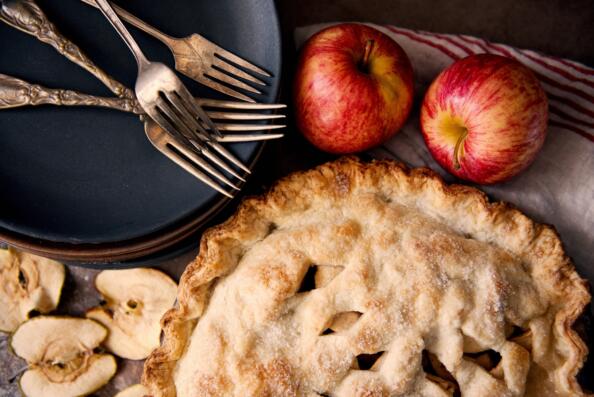
I have never been one to accept printed cooking lore as fact, at least not until I try it out for myself. Usually, the books are proven to be correct, but every once in a while I find that a hallowed cooking “fact” is actually a myth, copied from food writer to food writer with no critical assessment or experimentation (I’m looking at you Don’t-Salt-Your-Beans).
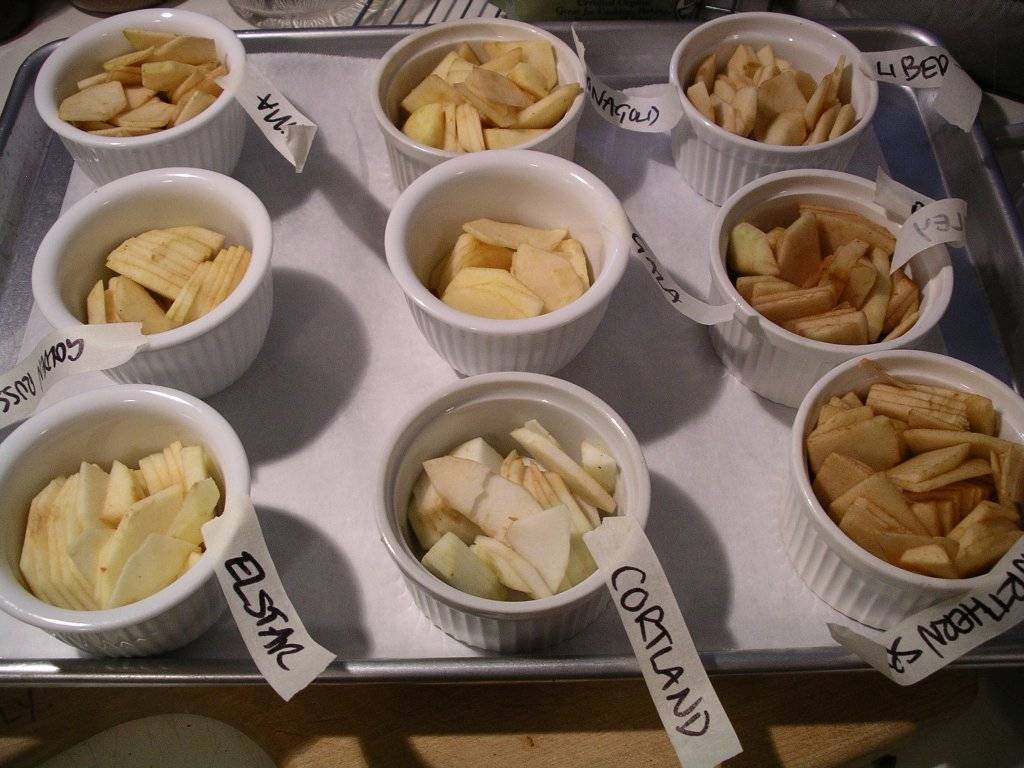
One such “fact” that I see everywhere, EVERYWHERE, is that Granny Smith apples are best for baking. They are reputed to “hold their shape” and to have “the best flavour”. I had always been a little suspicious of this and I decided a few years ago to put this “fact” to the ultimate test.
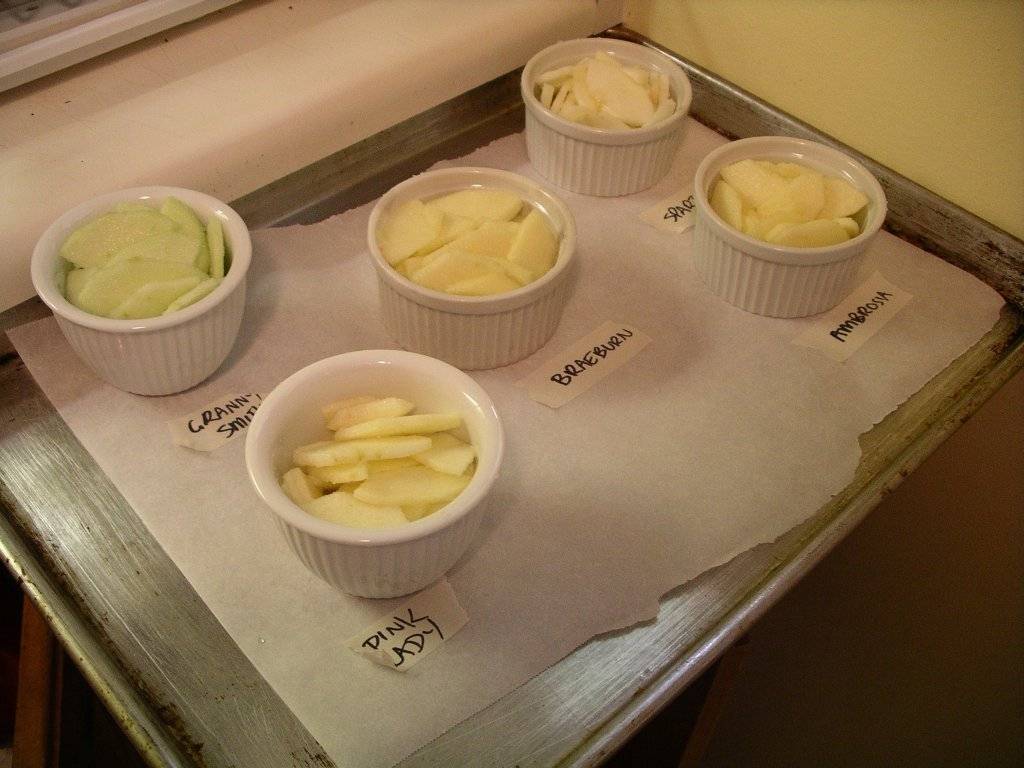
I have been meaning to blog about my Apple Test for years. It’s this obsessive kind of food experimentation that I particularly love to engage in, and the ensuing kitchen-prowess-making results are ones that I love to share with my cooking class participants. Students of my Pie-Making 101 class are already privy to this information regarding the Best Apple Varieties for Pies, and now, you, my blog readers get in on the action.
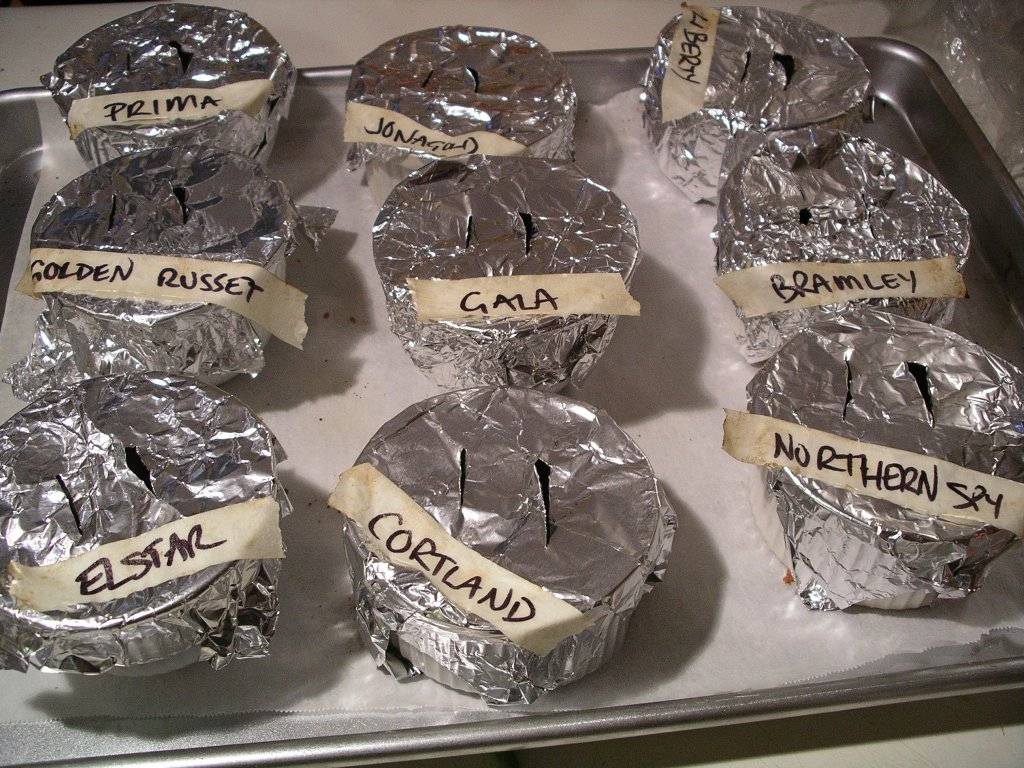
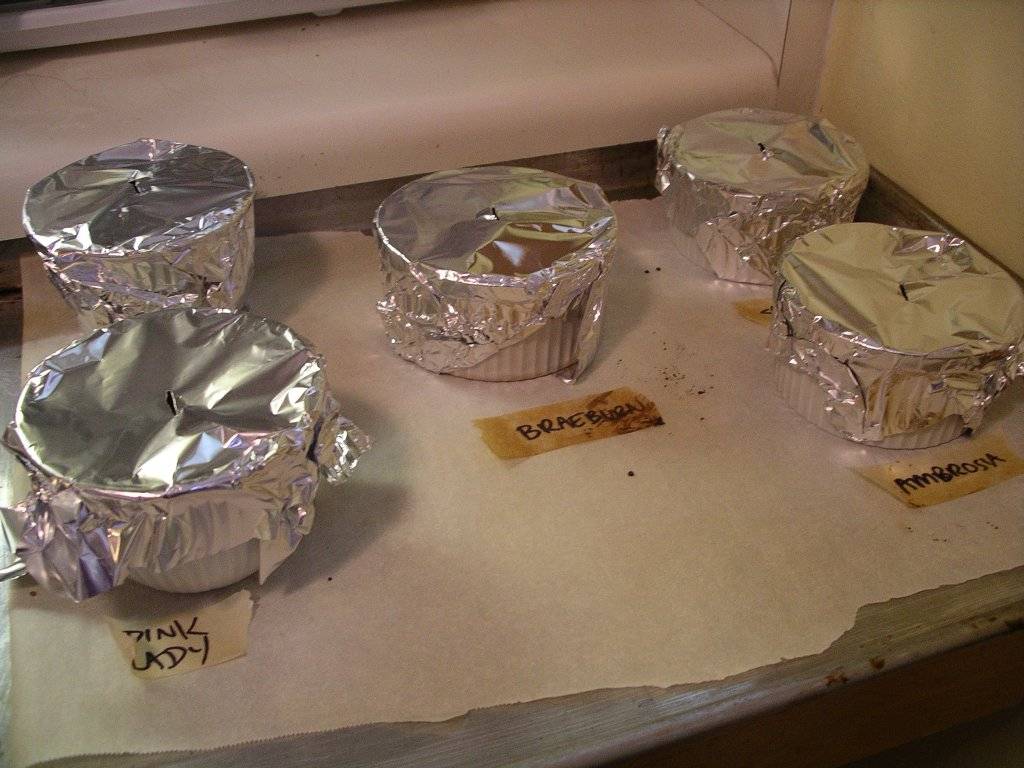
My Apple Test was epic. I don’t say this lightly. Trips to both farm stands and supermarkets netted 20 apple varieties to test. In order to mimic how each apple variety would behave in a pie, I did the following: each apple was peeled, sliced and tossed with an appropriate amount of sugar, and then placed in a ramekin covered with foil (the slits in the foil faithfully reproduced a pie top), labelled and baked. After being pulled from the oven, the apple varieties were all tested for flavour and texture. The results were completely different than I expected and well worth the effort! I love this kind of thing!
The most important thing I discovered in the Epic Apple Test is that tart apples (i.e Granny Smith), revered in print for their shape-holding abilities, actually get mushy when cooked! And that sweet apples (i.e. Gala) hold their shape! Mind blown.
The flavour discoveries were not so mind-blowing. As expected, heritage apples purchased through the farm stands had better flavour, but almost all of the apple varieties tasted delicious when baked with a bit of sugar. Sure, some were much more tart than others, but each had a special flavour, even most of the good old supermarket apples. So you can tailor your apple choices based on your budget, time constraints, and sweetness preference, as well as take the time of year into account. Right now you can buy loads of heritage apples at Dan’s Country Market, but not so in March.
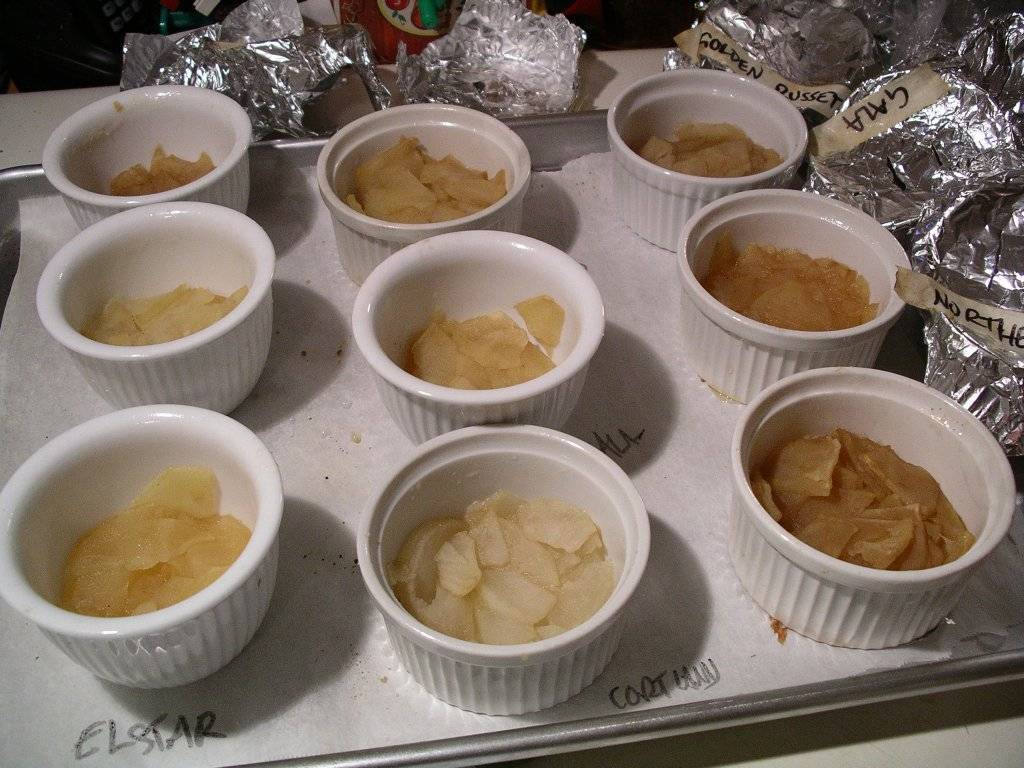
The detailed results of flavour and texture for 20 varieties of apple are below. In general, I discovered that apple pie works best with a mixture of at least two apple varieties, for the ultimate balance of flavour and texture.
An apple pie needs a mixture of both firm-textured (holds shape when baked) and soft-textured (breaks down when baked) apples, to make a filling that holds itself together with no additional thickener. (You want to avoid thickener, like flour or cornstarch, if possible, because it reduces the flavour intensity of the filling and can make it rubbery or gluey). The firm apples act like bricks which stack together to form a wall, while the mushy apples melt between the bricks to form a “mortar” that holds the “brick wall” together. Surprisingly, as I discovered in my Epic Apple Test, the sweet apples tend to hold their shape quite nicely, while the more tart apples get mushy. But, VERY IMPORTANT, you must slice your apples thinly to get the desired effect.
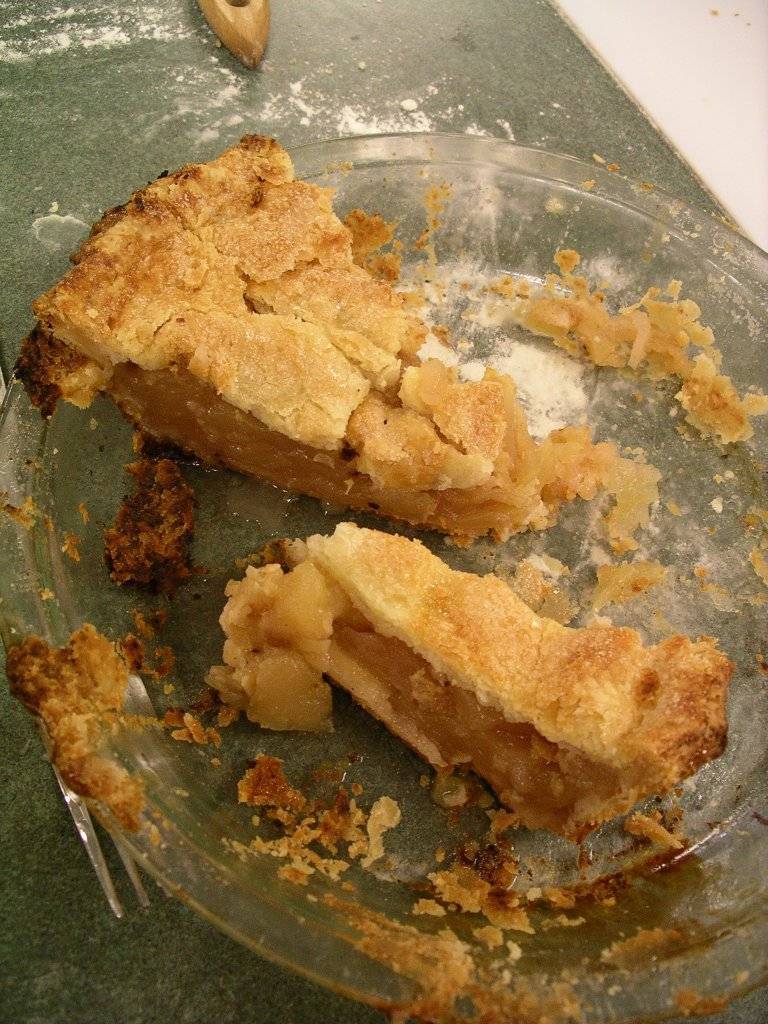
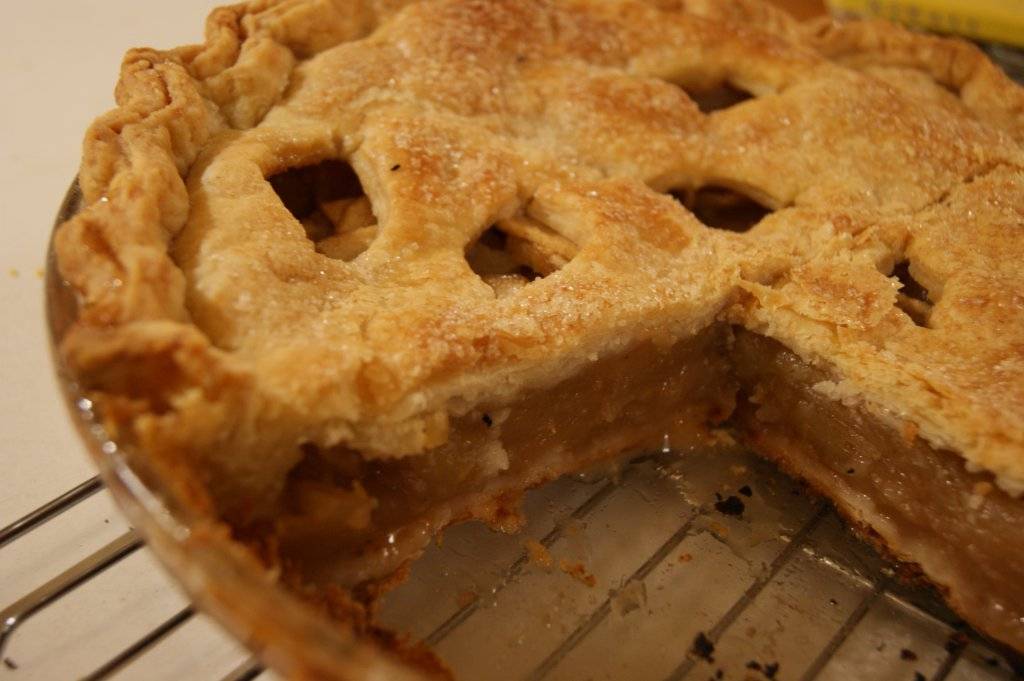 This, my faithful readers, is what an apple pie filling looks like with NO THICKENER (no flour or cornstarch), so long as you have paid attention to choosing the right apple varieties and slicing said apples thinly.

These apples include some supermarket varieties as well as a host of heritage apples, many which are famous for their baking qualities. In my experience, heritage apples are best for baking, not because they hold their shape well (they don’t), but because they all have a rich and complex flavour and a nice balance of tartness when cooked. Heritage varieties can be found at various farm stands in the fall, most notably at Dan’s Country Market on Oldfield road.
Golden Delicious – delicious, rich, sweet flavour
Jonagold – nice balance of sweet and tart, delicious, sometimes flowery
Ambrosia – sweet taste, nice “meaty” texture when cooked
Pink Lady – delicious flavour, balance of sweet and tart
Gala – very sweet, nice mild flavour, best to mix with tart apples
Elstar – delicious flavour and balance of sweet and tart, on the softer side when cooked
Golden Russet – a slightly mealier texture, mild and good flavour
Cortland – a sweet and unusual flavour, stays white when cooked
Liberty – tastes exactly like Minute Maid apple juice, softer texture, but still holds shape
Macintosh – great flavour and balance of sweet and tart
Spartan – excellent flavour and sweet-tart balance
Granny Smith – very tart, less complexity than the tart heritage apples (below)
Jonathan – more tart, nice flavour
Bramley – very, very tart, excellent flavour, complex, delicious
Gravenstein – sweet-tart, excellent flavour, delicious pie apple
Northern Spy – very tart, nice flavour, excellent pie apple
Prima – quite sour, very good flavour
Belle de Boskoop – very tart, excellent flavour
Cox’s Orange Pippin – tart, delicious
Newton Pippin – tart, excellent, complex flavour
I’m interested to know what your experience has been, or will be now that you have seen this post. Let me know in the comments below. And in the meantime, happy autumn of pie cooking!
Jun. 28, 2021
In this recipe round up, I have gathered my best and most delicious summer salad meal recipes in one post, for days when it’s too hot to cook!
Oct. 25, 2020
Quince have a wonderful flavour, but an almost impossibly hard texture. Read on for a quick kitchen tip that makes quince easy to peel and cut!
Sep. 27, 2020
Pumpkin spices scones are a perfect fall treat; not-too-sweet, fragrant with spices, with a full complement of rich pumpkin flavour.
I am a great fan of Tarte Tatin. I was told that the French use Belle de Boskoop apples for their Tarte Tatin. It is impossible to find these apples in the Sarasota area. I’ve made tartes with Golden Delicious or Granny Smith. The Granny Smith tartes are always on the mushy side but with nice tart flavor. Golden Delicious tartes hold up slightly better but are not as complexly flavored as the Granny Smith. Have you ever made a Tarte Tatin and if so, what variety of apple do you use?
I have made a tarte tatin, but I used quince!! LOL. This gives me an idea t try several varieties of tarte tatin this fal with different apples.
I make hard apple cider and am used to looking at apples through that lens. I also have a science background and am trying to understand your results. Sweet and tart are actually descriptions of how we perceive the ratio of sugar to malic acid. Apples can have low, medium, high, or very high sugar levels, and low, medium, high, or very high acid levels. I don’t have numbers for all of the varieties you tested but Liberty, and Gala have medium sugar and medium acid. Macintosh, Cortland, Spartan, Wolf River, and Northern Spy all have medium sugar and high acid. Belle de Boskoop has very high sugar and very high acid. Golden Russet has very high sugar and high acid. Bramley and Yellow Transparent are low in sugar and high in acid. So it is a mixed picture. Maybe something else accounts for whether or not an apple keeps its shape or turns to mush when cooked? On a point another commentator made, apples that have been in common storage loose some of their acid as they age, and any starch they had left when picked gets turned to sugar.
Hi Christina,
very interesting. I based my categorizations on how we perceive apples on the tongue, whether the apples taste mainly tart (e.g granny Smith) or mainly sweet (e.g. Gala). I have done this experiment twice, two years apart, but both times in the early fall, when the apples are newly picked. Both times I got the same result. I don’t know exactly why the results were that way – as you say, it might have nothing to do with the acid content. Maybe it’s due to the acid interplaying with the sugar. I don’t know if or how pectin plays into this. I am not a food scientist, only a chef and avid cook who observes what happens in the kitchen.
PS Maybe the missing piece of the puzzle is pectin, which is high in under-ripe and just ripe fruit, and decreases as the apple ages. This article on the science of jam making may shed some light: https://www.exploratorium.edu/cooking/icooks/article_6-03.html#:~:text=Note%20that%20just%2Dripe%20fruit,pectin%20turns%20to%20pectic%20acid. The author explains that acid helps to extract pectin from cells and that sugar attracts water away from the pectin so that pectin bonds with itself instead to create a gel network….Apparently green skinned apple varieties are higher in pectin than their red-skinned counterparts.
I have done this experiment twice, two years apart, but both times in the early fall, when the apples are newly picked. Both times I got the same result. Maybe I will try another experiment later in the year
Thank you for your research. I almost never like apple pie, although that probably has a lot to do with having mostly tasted grocery store pies. I recently tasted apple pie at White Spot and decided I wanted to try to make a pie after all. They say their pie is made from Granny Smith apples but it sure doesn’t seem like it. Next time you pass by a White Spot, let me know what you think. I think I’ll follow your advice instead, for now (and bring your list with me to shop what’s on sale).
And now to try to figure out a pie crust.
Gravensteins are delicious – I agree.
I’m going to try coriander in a pie this fall. I can see how it would be really good.
I have never made a pie. My wife passed recently and I have all the tooling I need. What are best apples for a beginner. I’ll never be able to get the quality that grams made,but going to try.
For beginners, I suggest buying apple varieties that are available at the supermarket. Sweet varieties: Jonagold or Golden Delicious. Tart Varieties: Macintosh, Sparton, or Granny Smith. Buy a 50/50 mix. Good luck!
Best year ever for British apples.
Trees heavily laden with fruits.
Blackberries also have lined the hedgerows in abundance whilst rosehip softly ripen to beautiful reds also waiting to be harvested are chestnuts and cabapples excellent for roasting on fires or turning into preserves or jellies.good luck its a great time for cooking.
I hate to tell you this, but proper treatment of the apples prior to putting them in the pie is the solution to soggy apple pie filling, not any particular variety of apples nor adding “thickeners” like tapioca or flour.
Macerate your apples, drain off the juice, and cook it down to a thick syrup. Then add it back to the pie. My favorite pie apple – my favorite apple for cooking ANYTHING – is MacIntosh. I don’t need to mix apples. Just treat them right to start with.
Hi Pye, that is a great idea. What you described is called Cooked Juice filling. There are three types of fruit pie fillings: 1) Cooked Fruit (where you cook all the the filling ingredients ahead of time – this is commonly done for cherry pie, as an example); 2) Cooked Juice, which is what you described, and 3) Old Fashioned, which is the most common way, where everything is added raw to the pie. Old Fashioned is the most common method, and the most straighforward, and this post is to help people get the best results from that method. But I agree that Cooked Juice and Cooked Fruit both make excellent pies, too.
I agree with the mixes pf apples except on only one case…and that is the old world gravenstein apple. Fill your pie with it—you can’t go wrong. The depth of flavor and tart sweet is just the best. And if you really want to cap it off, top it with an apple cider cinnamon sauce made from gravenstein cider. Now you’re talking!
true, gravensteins are amazing!!
I love to make my apple pies with Golden delicious before they turn yellow.!
But around here in Arkansas, I can’t find them any more. Green or yellow.
They say because of shelf life. I also don’t care for Granny Smith.